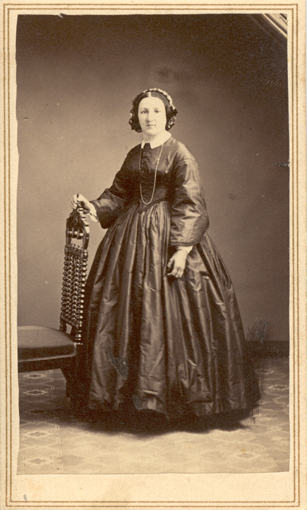
Martha In Later Years 1910 census records show Martha at age 55 living as "head of household" with her daughter Lillian (age 26) and son Frederick (age 16) in Weiser, Washington County, Idaho. Weiser is in the extreme western part of Idaho a little north of Boise and is a long way from the Gentile Valley.
Exactly what brought Martha to Weiser and
when she arrived after her 1903 divorce are not known. There is, however,
circumstantial evidence that she may have had Hillman relatives living in the
area including 2 possible brothers.
In the 1920 census Martha, age 65, is shown living with son Frederick in Shoshone, Lincoln County, Idaho which is located mid state (perhaps 18 miles north of Jerome and several hundred miles from both Weiser and the Gentile Valley in opposite directions). A World War I Civilian Draft Registration list shows that both sons Frederick and Edward registered for the draft (which does not mean they necessarily served in the military) in Lincoln County, Idaho (therefore possibly in Shoshone) in 1917 or 1918 indicating that they were there by 1918 at the latest. It is not known why Edward and Frederick came to Shoshone nor when they arrived. If it is assumed that Martha moved to Weiser in late 1903 immediately after the divorce and that she moved to Shoshone in 1918 after the marriage of her daughter in Weiser, she could have spent up to 15 years living in Weiser (or 17 years if she came to Shoshone right before the 1920 census). At the age of 65 in 1920 it is possible that Martha was living with a son out of necessity and that Frederick and/or Edward were supporting her financially. A curious note: When the Idaho Historical Society found the Turner's divorce case file for me in 2006 they also found a record which showed that a certified copy of the divorce judgment had been filed in Washington County, Idaho (where Weiser is located) on January 3, 1920 "at the request of J. F. Clabby". Son Edward's wife's maiden name was Clabby and she was from, and married Edward in, Weiser. This makes J. F. Clabby very likely the father or brother of Edward's wife. Why a copy of Martha's divorce Judgment would have been filed in Weiser by a relative of her son's wife 17 years after the divorce, 4 years after Edward J. Turner's death, and around the time that Martha moved to Shoshone or a year or two thereafter is a mystery.
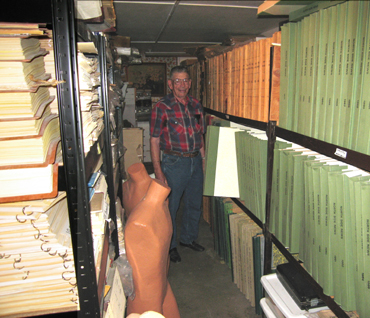
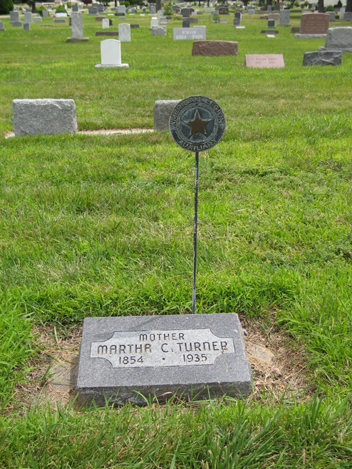
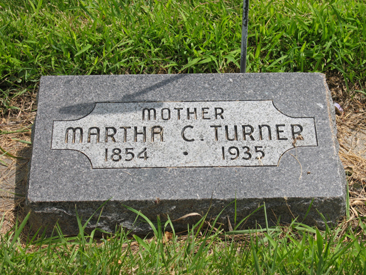
I could not find Martha in the 1930 census but that year son Frederick is shown with his wife and a daughter in Jerome, Idaho as is son Edward along with his wife and 4 children. It is therefore likely that Martha was also in Jerome in 1930 and was just missed by the census takers. I found an online Idaho Death Index which showed that a Martha Catherine Turner, born in about the right year based on earlier census data, had died in Jerome on January 11, 1935 and was buried there. This was enough for me to strongly suspect that I'd found Martha's date-of-death and final resting place but it took a trip to Jerome for me to prove it. In July 2006, while on my way to the Gentile Valley, I visited Jerome for an afternoon where I visited the cemetery and also found a copy of Martha's obituary in the basement of the Jerome County Historical Society Museum (along with, much to my surprise, ones for her son Edward and his wife.) Had Martha moved to the Shoshone/Jerome area in 1918 she would have lived in this area for 17 years prior to her death. She is buried in the Jerome Cemetery adjacent to the town in grave # 1-3-47. The obituary for Martha Catherine Turner (North Side News, Jerome ID, Jan. 17 1935, Page 8) reads:
"Death of Pioneer - In the death of Mrs. Martha Catherine Turner in Jerome last week there passed another of the real pioneers of the west. After a lingering illness, Mrs. Turner died on January 11th, 1935 at the home of a son, E. H. Turner. She was 81 years of age at the time of her death. Mrs. Turner was a real pioneer of the west and of Idaho. When a child of about ten years of age, she crossed the plains in the early 1860's with her parents, who settled in Washington. She had been a resident of Idaho for fifty-eight years. Her husband, E. J. Turner, died in 1916. A number of years ago the family resided in Shoshone, this state. Mrs. Turner is survived by two daughters, Mrs. H.H. Hina [Hine] of Seattle, and Mrs. E.V. Jefferson, of Weiser, and three sons, Ed H. Turner and Fred Turner of Jerome, and Percy Turner of San Francisco. The funeral was held at Jerome last Sunday afternoon at Jerome Catholic church, Father Schermenson, officiating, with interment at Jerome Cemetery." The obituary was very likely written by sons Edward and/or Fred. It is noteworthy that there is no mention in it of the 26 years Martha spent in the Gentile Valley raising her children and as the wife of a prominent local rancher and leader.
Martha's grave site contains a marker identifying her as a member of the American Legion Auxiliary. My research indicates that to obtain membership she would have needed to be the wife, sister, daughter, or mother of a World War I veteran. Since a wife, sister, or daughter relationship would not seem reasonable, its therefore likely that one or more of her sons served. Records show that Edward, Percy, and Frederick all registered for the World War I draft in 1917 or 1918 (which doesn't necessarily mean that they served). In 1917 Edward would have been age 40, Percy age 29, and Frederick age 23. Based on age I therefore think it most likely that Frederick served in World War I however I've been unable to prove this.
Edward In Later Years
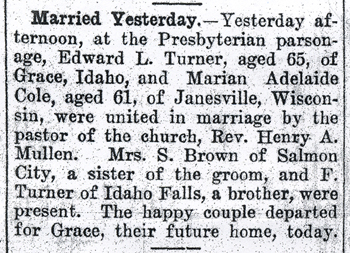
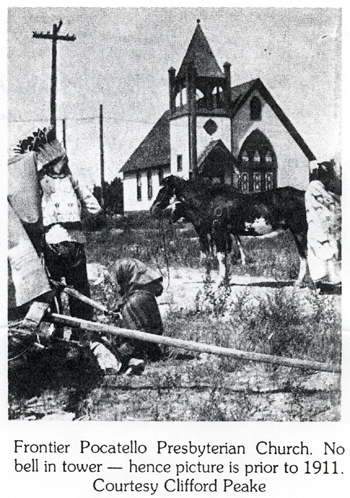
While he didn't show up in the 1910 census its clear that Edward J. Turner continued to live in the Gentile Valley for some time thereafter. On March 21, 1911, more than 8 years after his divorce from Martha, Edward J. Turner married Marian Adelaide Cole in Pocatello, ID. Both a marriage record and the published newspaper announcement indicate that Edward was from Grace, ID and that Marian was from Janesville, Wisconsin, E.J.'s childhood home. Census records show Marian (b. about 1849 in Ohio) in Janesville in 1900 and 1910. In 1900 she was married and living with her previous husband and one "son". By 1910 she was apparently widowed but still living with 18 year old Howard Cole. (It's not clear whether Howard was her son, step son, or some other relationship.) At the time of the 1911 wedding E.J. was 65 years old and Marian about 61. I think it highly likely that E.J. and Marian had know each other in the Janesville area as children and/or young adults back in the 1860's and/or the early 1870's before E.J. headed west since Marian and her parents are shown as living within a few miles of the Turners in the 1870 census (when E.J. would have been about 25 years old and Marian 21). It would be reasonable to suspect that they had known each other for some time since, as explained elsewhere, both of E.J.'s parents had passed away and all of his surviving siblings were no longer living anywhere near Janesville by 1893. Thus for 18 years before the marriage he no longer had any direct family contacts in Janesville and thus, I presume, less reason to visit the area. Why the marriage took place in Pocatello, perhaps 80 miles northwest of the Gentile Valley, and not in Grace or Janesville is not known for sure but it could have been to allow two of E.J.'s siblings to attend. E.J.'s brother, Frederick Hugh Turner, attended the wedding and witnessed the marriage record. 1910 census records show that he was living in Idaho Falls, 60 miles north of Pocatello and the wedding newspaper announcement confirms this. In addition, the newspaper announcement indicates that "Mrs. S. Brown of Salmon City, a sister of the groom" (E.J.'s sister Sarah) also attended the wedding. Salmon, Idaho is quite a distance northwest of Pocatello and near the Montana border.
Since all of E.J.'s children except for Percy had left the Grace area of Idaho before or around the time of his divorce from Martha in 1903, it is likely that only Percy ever got to know his father's second wife well. I have no information which indicates whether or not any of the other children ever even met their step-mother Marian. I also have no information indicating whether Marian's son Howard (shown in the 1910 census with his mother in Janesville) moved to the Gentile Valley with his mother. Howard would have been about 19 at the time of the marriage. In March of 1913 Edward J. Turner obtained the last of his homestead land from the government, 160 acres adjacent to his existing holdings. E.J. would have been 68 in 1913, an age at which he could be expected to be slowing down somewhat and/or thinking about retirement. The "Vol. 1915-1916" edition of the "R.L. Polk & Co.s - Bannock County Directory" ("Copyright Secured 1914") obtained from the Marshall Public Library in Pocatello shows that Edwd. J. Turner of Grace owned only 160 acres of land with a tax valuation of $1500. Since no other land ownership is shown for him it's likely that by this time he'd sold most of his land holdings and possibly may have only kept the 160 acres acquired in 1913 (above).
The last major definitive record I have regarding E.J. Turner's life prior to his death is his well documented February, 1914 attendance (along with his wife Marian) at the banquet in Grace in celebration of the Last Chance Canal. A letter I received in December of 2006 from Jay and June Turner of Grace, ID (unrelated previous owners of some of E.J. Turner's former ranch who I had contacted to see if they might be related and/or have any information regarding E.J.) tells a very sketchy story of Edward's later life. It reads in part:
The story above is of course third-hand information passed on over several generations for around 90 years. The part about the "mail order bride" has some truth to it based on the fact that of E.J. Turner's second wife Marian had come from Janesville, WI. The part about giving away the farm to Ida Kackley could likewise have a little truth to it but could also be somewhat misleading or perhaps not at all correct. I've uncovered no information which shows that E.J. Turner gave away any part of his ranch but I suppose it's possible (more below). The Kackley's did end up owning at least parts of what had previously been the Turner ranch and current day topographic maps of the area show a "Kackley spring" just south of the current Grace Power Plant on what was clearly once E.J.'s land. The part about E.J.'s new wife not liking Grace could be true but the evidence I have suggests that Marian never "left" her husband though the couple did apparently leave together (more below). The indication that E.J. "started having health problems" would turn out to be true (more below). The Quest for E. J. Turner's Place of Death and Final Resting Place For over two years E.J. Turner's exact date of death, place of death, and final resting place remained a mystery to me in spite of much work expended to determine these facts. My mother's note regarding the Turners indicates that he passed away in 1916 (followed by a question mark for unknown reasons) and Martha's obituary also indicates that he died in 1916. But I had nothing more to go on. The logical place to look for his death information would be in and/or around Grace, Idaho where he had lived for almost 40 years. But I could find no Idaho death records for him nor an obituary in the Soda Springs newspaper (obituaries being hard to find without a death date). Searches of nearby cemetery records come up with nothing and a Grace area genealogy volunteer even visited local cemeteries in search of his grave with no luck. In addition, when I chatted with Don Gilbert on my 2006 visit to the area I asked if he were aware of any grave sites on former Turner Ranch land, which he wasn't. Edward J. Turner simply seemed to disappear. I considered other possible scenarios. Perhaps he had retired and moved elsewhere by 1916. Perhaps the mention in Jay and June Turner's letter (above) that "She did not like it here, and after awhile, she left" provided a clue. Could both Edward and Marian have moved back to Janesville, WI where they both had roots. I looked into these possibilities as much as I reasonably could but didn't have a lot to go on and again came up with nothing. Finally, in the late summer of 2006 and having exhausted all the other options, it occurred to me to see if there might be any probate (estate) records stored somewhere in Idaho which might provide some information. I considered it unlikely but thought I'd give it a shot. The result was a frustrating (but ultimately successful) 6 month exercise in interagency Idaho state government bureaucracy. The short version of events started when I contacted Idaho State Public Archives (in Boise). They indicated that they had crates full of such of records but wanted the Bannock County Clerk's office to provide an index so they'd know which crate to look in. This took months and when the Bannock County finally provided the index, the State Archives then indicated that the records for E.J. Turner were not there even thought the index said they should be. Both the County and the State acknowledged the existence of a probate case file for E.J. Turner but neither could find it. Finally, after almost 6 months and much prodding on my part, the Bannock County Clerk's office found the case file under a pile of other papers at the bottom of an old safe in their basement in Pocatello. Their best guess is that 50 or more years ago the file had been pull out for special treatment, possibly as part of a microfilming effort, and not placed back where it was supposed to be. Mystery Solved In early April of 2007 I received copies of E.J. Turner's probate case file which indicates that he passed away on June 1, 1916 in San Diego, California. The location was quite surprising to me as I had uncovered virtually no evidence that he had ever been there before and San Diego is quite far removed from Grace, ID both in terms of distance and life style.
Upon learning the death location I immediately requested a copy of his death certificate from the State of California (which took till the end of June to arrive). The death certificate conflicts with the probate file in that it indicates that E.J. Turner died on Oct. 31, 1916 (not June 1 as indicated by the probate case file). I trust that the death certificate death date of Oct. 31 is the correct one as it is signed by an attending physician who cared for him in late October as well as by his wife Marian A. Turner while the probate case file treats his death date only in passing and could have easily gotten it wrong. Additional new information contained in the death certificate includes the fact that E.J. Turner was to be buried in Janesville, Wisconsin, that he died of "Chronic Myocarditis" (a heart condition), that his birth place was Canada (which conflicts with some census records which show Wisconsin), and provided confirmation of the names of his parents (John and Margaret Turner ) and their birth places (England and Wales respectively). Also, it indicates that E.J. had been in San Deigo for only 22 days and shows his home as Grace, ID. All of the information on the death certificate, with the exception of that of a medical nature, would have been provided by E.J.'s second wife Marian who signed it on Nov. 2 and who thus most certainly must have been with him in San Deigo when he passed away. When I'd first received E.J.'s probate
file indicating a date of death of June 1, 1916 I'd unsuccessfully tried to find
an obituary in the Soda Spring Chieftain newspaper's online records shortly
after that date. When I received the death certificate showing the date of
death was really October 31 I rechecked the Chieftain archive and found what
I'll call E.J.'s "obituary" published on the front page on Nov. 9, 1916.
It indicates that E.J. had gone to San Diego "for the benefit of his health",
that his son Percy had immediately left for San Diego upon learning of the
death, and that the Kackley's were by then the owners of the former Turner
ranch, E.J. having moved to "his present location" a few years before.
Referring back to my correspondence with Jay and June Turner (above), this
confirms their mention that E.J. was having health problems and suggests that
the obituaries mention of "his present location" may be the location Jay and June
were referring to when they wrote "he built this big nice home for her"
(referring to second wife Marian).
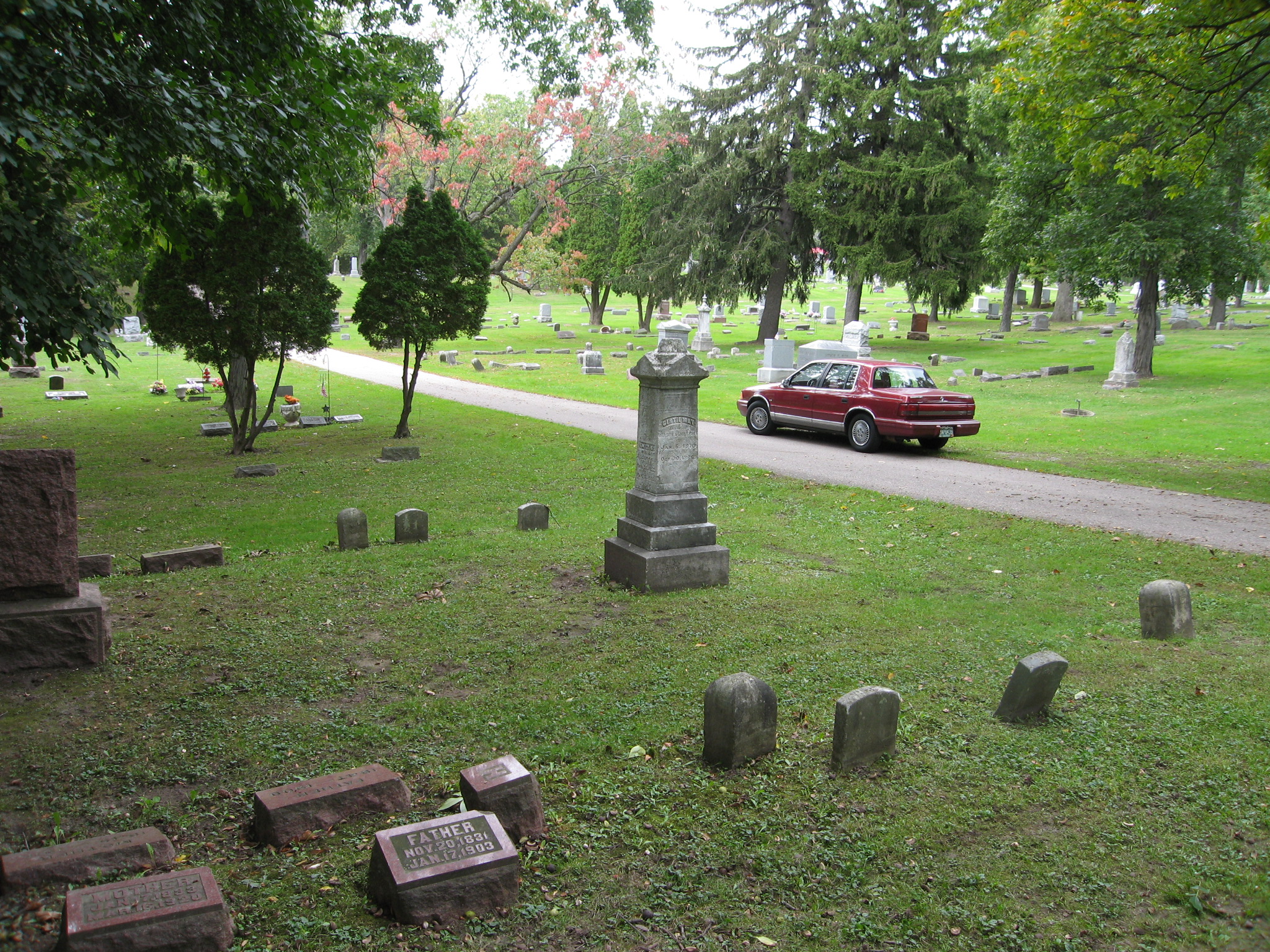
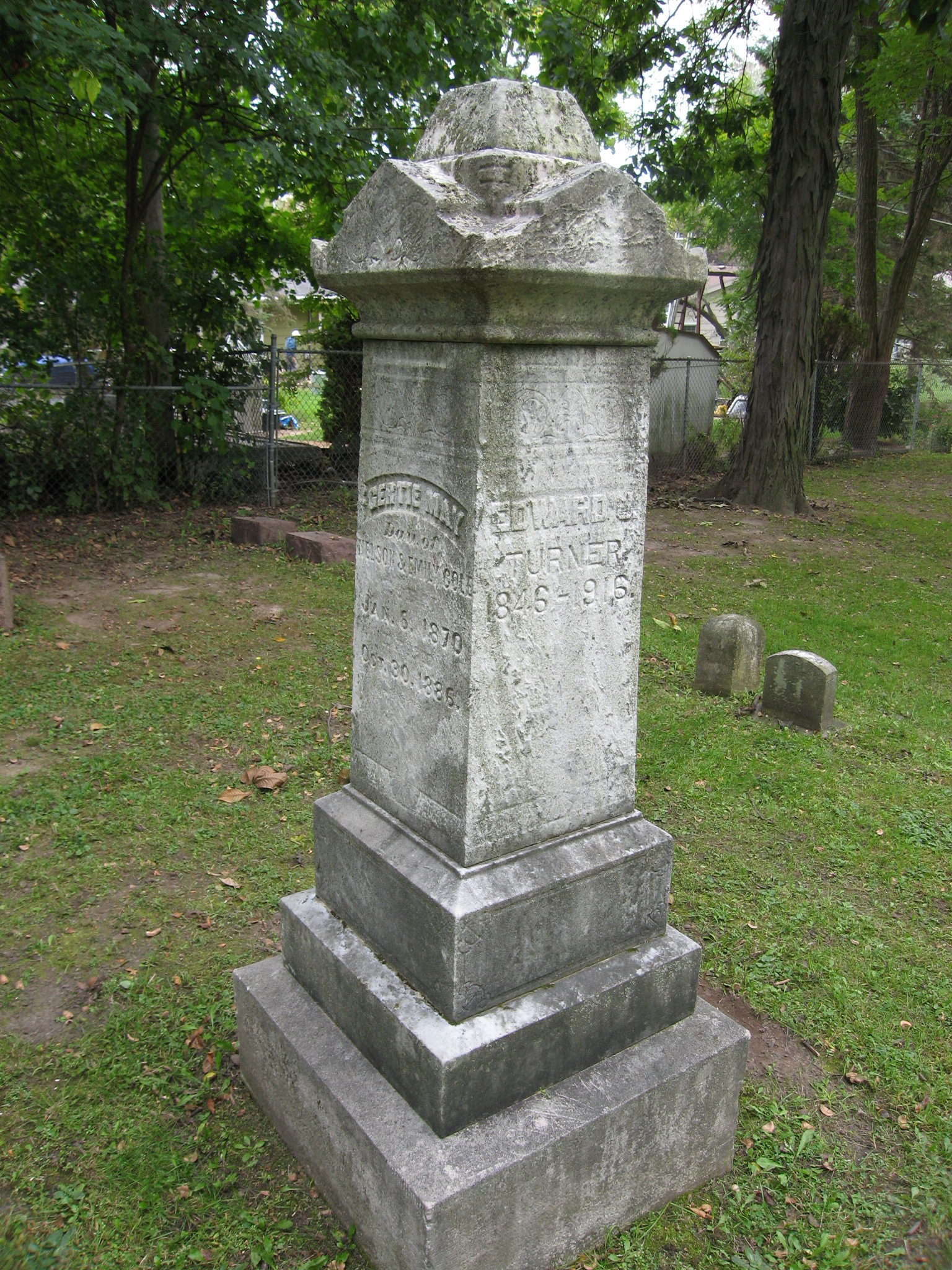
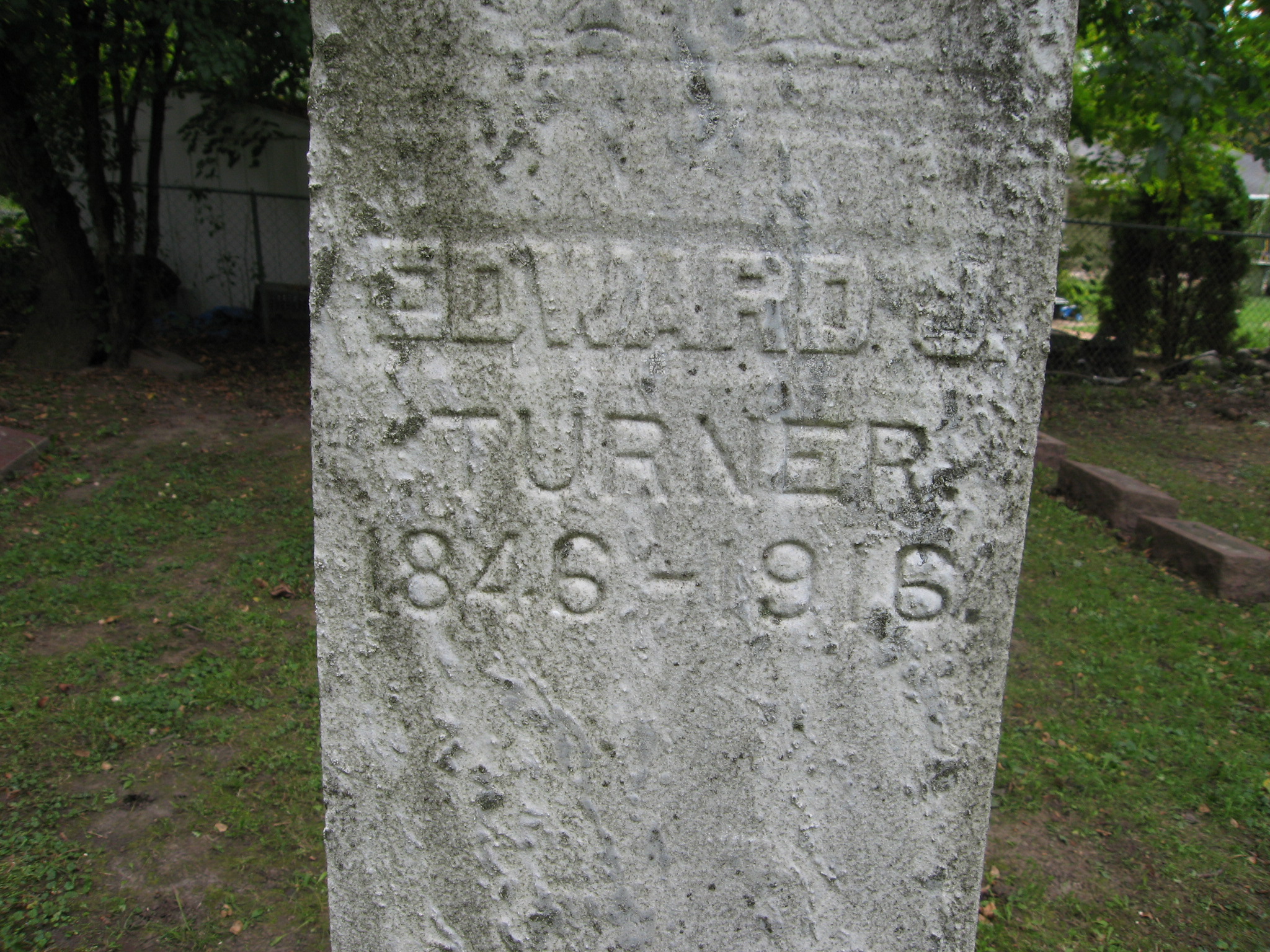
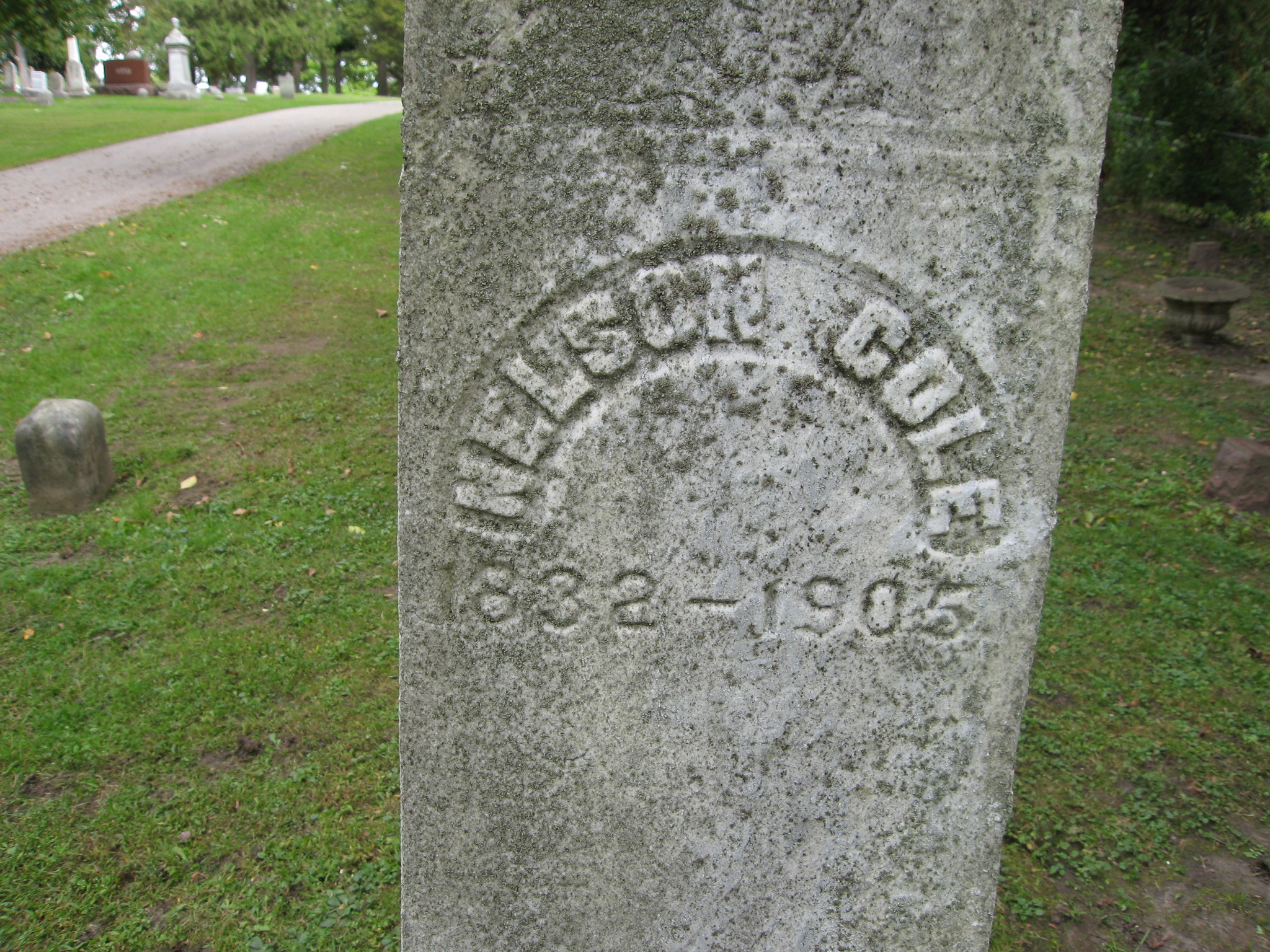
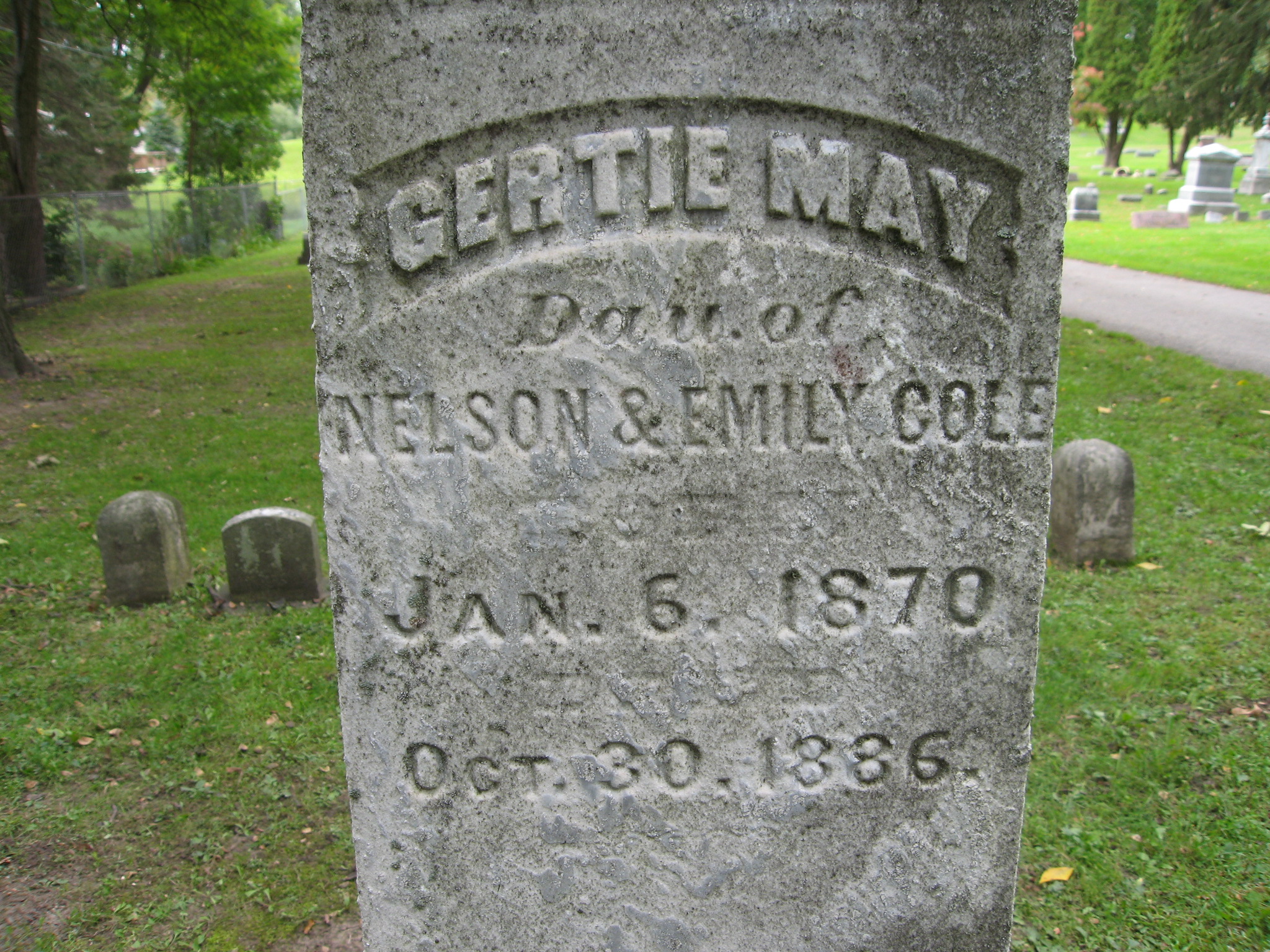
Perhaps E.J. and Marian were in San Diego on vacation (maybe to avoid another harsh winter in Idaho) or with the intent to check it out as a possible retirement location. In any case, E.J. was still legally a Grace, ID resident at the time of his death and he had not entirely cleaned up his affairs there. The probate file shows that at the time of his death E.J. owed Dr. Ellis Kackley (in Idaho) $50 for two office visits in the spring of 1916; one for the "reduction of fracture of arm for wife" and the other for "one visit to Self". The probate case file also indicates that E.J. had sold his Gentile Valley land holdings "a short time" prior to his death. And finally, the probate case file shows that Marian stayed in San Diego, apparently taking up permanent residency there, starting immediately after E.J.'s death and for at least 7 years thereafter. I have run into no indication that Marian ever returned to Grace after E.J.'s death. This suggests that it may have been the couple's intent to move to San Diego and tends to confirm the 2006 Turner letter (above) which suggests that Marian may not have been all that happy living in Grace. Edward J. Turner's Final Resting Place Now armed with the specific information from his California death certificate that E.J. was to be buried in Janesville, Wisconsin I redoubled my effort to find his gravesite there. After some work I was able to find a local genealogist who had access to cemetery records not yet publicly available on the internet and which showed that E.J. was in fact buried in Janesville's Oak Hill Cemetery (the largest and oldest primary cemetery in the area) on November 10, 1916, 11 days after his death. The mystery of E.J. Turner's burial location was now solved but cemetery records (confirmed by subsequent photos) immediately created another minor mystery. E.J. is buried in the same plot and memorialized on the same monument as Marian's first husband, Nelson Cole, and some of Nelson's relatives! This seems strange to me as E.J. Turner's parents along with one brother are interred about 3 miles due east of the outskirts of Janesville in the Mt. Zion/Clarke cemetery, a small neighborhood cemetery directly across the street from the elder Turner's farm where E.J had grown up. There is plenty of room for more graves at his parents monument so I can't explain why E.J. wasn't buried there. And a final interesting observation: Marian isn't buried with her two husbands and I have been unable to find a burial location for her. Why E.J. wasn't buried with his parents will most probably remain a mystery. E.J. left no will as such so there is no written documentation of his intentions but one can assume that, since pretty much all of his Gentile Valley family (except son Percy) had long ago moved to other parts of Idaho, the possibility of "going home" to the Janesville area would likely have crossed his mind as an option. One might also assume the he'd discuessed his final resting place at some point with Marian who, also being from Janesville, would have certainly known that E.J. had grown up there and had parents buried there. So, why was E.J. buried with his second wife's first husband and not with E.J. parents? I suppose it possible that, even if E.J. had indicated a desire to be buried with his parents, Marian perhaps didn't know exactly where they were interred and couldn't easily find out so her first husband's plot become the only viable alternative. I have no specific information as to whether Marian accompanied E.J. on his final trip to Janesville and attended his funeral there but I suspect she may have as her nephew Frank Mills (who Marian would live with in later years) came from Iowa to be a pallbearer at the funeral according to one of E.J.'s Janesville obituaries. In October of 2008 I visited the Oak Hill
Cemetery in Janesville and took the accompanying photos which confirm cemetery
records regarding E.J.'s final resting place in the Cole plot.
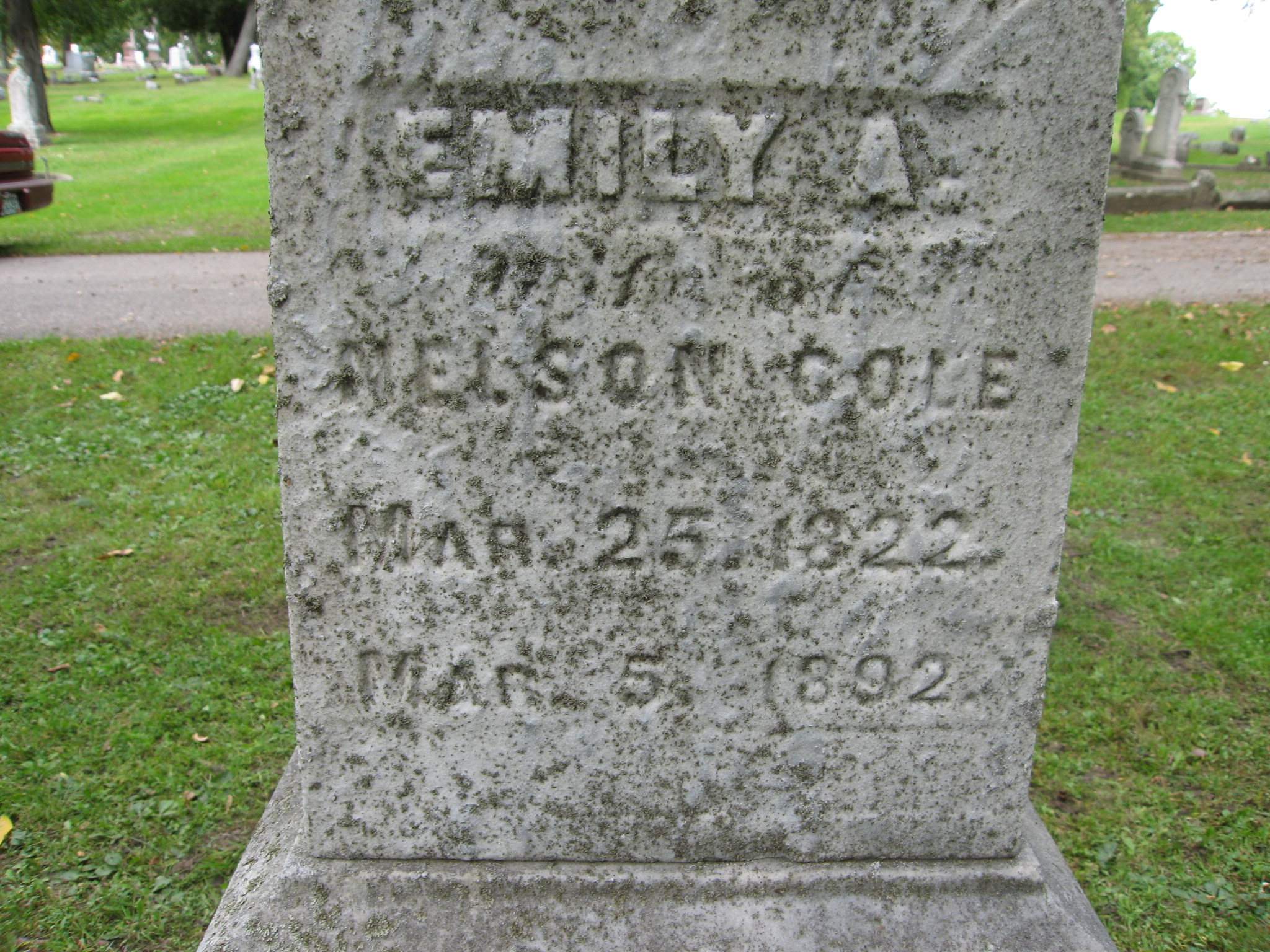
Epilog What Happened to Marian? Little is known regarding Marian after E.J.'s death. She stayed in San Diego, CA at least for awhile. She shows up there in the 1920 census at age 70 living with an elderly married couple where she is shown as a "boarder". E.J.'s probate case file suggests that she remained in San Diego till at least 1924 when the last distribution check from the estate was sent to her and cashed there. In the 1930 census Marian A. Turner shows up in Osceola, Clark County, Iowa. I strongly suspected that this was E.J.'s wife since the middle initial is correct as well as her age at 80 and the record show's she was born in Ohio, also correct. She is shown as widowed and is the "aunt" of head-of-household Frank M. Mills. My suspicions were confirmed when additional census record checks showed that Marian's sister Emily had married Harlow Mills in 1873 (in Janesville) and by 1880 was living in this same area of Iowa and had a son named Francis ("Frank Mills" in the 1900 census for the same household) with the correct age for the Frank Mills shown in 1930 census. Marian was clearly living with her nephew, the son of her sister. I couldn't find Marian in the recently released 1940 census when she would have been 90 suggesting that she likely had passed away between 1930 and 1940. One thing that is known for sure is that, for unknown reasons, she in not buried with her two husbands in the Oak Hill Cemetery in Janesville, WI. Marian's Past I've uncovered some information regarding Marian before her marriage at age 61 to E.J. Turner in 1911. Wisconsin marriage records show that "Marian Adelaide Adams" married previous husband Nelson Cole on April 8, 1893, about a year after the death of his previous wife Emily. At the time of the marriage Marian would have been about 43 years old, an age at which I suppose she could have been previously married and even had grown children though I've found no evidence of this. The marriage record suggests that her maiden name was "Adams" and there is a census record in 1870 for Johnson, Rock, Wisconsin (the Janesville area) showing a "Marion A. Adams" born about 1849 in Ohio living with her parents Francis and Amelia Adams along with a brother (Fred) and sister (Emily). Since E.J. Turner is known to have still been in the Janesville area in the mid 1860's (a few years before this 1870 census record) it's very possible that he and Marian had known each other there prior to his heading west. In 1870 E.J. would have been 24 years old and Marian 21. The 1900 Janesville, WI census shows Nelson and Marian living with a presumed son Howard Cole (no age given). The 1910 Janesville census shows Marian as widowed and living with child Howard age 18. This suggests that Howard was born in about 1892. Nelson's previous wife Emily had passed away on March 5, 1892 (see tombstone photos above) suggesting the possibility that Emily may have died in child birth and that Howard was not Marian's son but rather step-son. This all seemed nice and logical till I noticed that Emily was born in 1822 (as indicated on her tombstone and clearly confirmed by 1880 census data for the Nelson household) and was thus 70 years old when she died, not a likely age to be giving birth. Another possibility: Census recorded ages tend to only be trustworthy within a couple of years which suggests that possibly Howard could have been born shortly after the 1893 wedding of Marian and Nelson. Marian giving birth at age 43 is also unlikely but far less unlikely than Emily having a child at age 70. I suppose it also possible that Howard Cole was adopted or the son of a Cole relative. Miscellaneous Information
From E.J. Turner's Probate Case File Edward John Turner did not leave a will so his estate was handled under the statutory laws of the State of Idaho. The first activity took place on Feb. 2, 1917, about 3 months after E.J.'s death, when his son Percy G. Turner (the only remaining child still living in the Grace area and thus the one who likely knew E.J.'s second wife Marian the best) filed papers in Pocatello, ID (the county seat) requesting to be appointed administrator of his father's estate (which were subsequently granted by the probate judge). On that day Percy also filed papers naming the heirs to the estate as E.J.'s wife Marian and his 5 children from his previous marriage to Martha. Also on Feb. 2 Percy filed an inventory of the estate's assets which consisted "almost entirely of real estate situated in Bannock County" (actually in the form of mortgages on the property) and "which was sold a short time prior to the decedents death". The mortgages had an estimated value at the time of $9,000 (but the estate later paid out a total some what less then this for reasons that are not entirely clear). There is a hard-to-read handwritten list of the land secured by the mortgages (which, while it is not entirely clear, may have been due from from three individuals: Olund, Hays, and Pond). As near as I can decipher it, the mortgages account for 1040 acres of the 1240 acres which I've documented that E.J. had acquired over the years. The unaccounted for 200 acres is pretty close to the 160 acres shown by the R.L. Polk directory as owned by E.J. around 1914 to 1916 (above). Perhaps this last 160 to 200 acres of land was sold as part of the estate (though I find no specific record that it was) or perhaps it had in fact been given to Ida Kackley shortly before E.J. death as suggested in the 2006 Turner letter (discussed above) just before he headed for San Diego. I note that none of the mortgages held by the estate were in the name of Kackley which I find a little confusing. Public notices to identify possibly creditors were published and the only creditor to make a claim was Dr. Ellis Kackley who submitted a request for payment for the 2 office visits mentioned above. The estate was not finalized and discharged by the probate judge until March 2, 1929, over 12 years after E.J.'s death. On the other hand, most of the proceeds of the estate were paid out over the period from 1917 to 1924 in the form of relatively small checks periodically (but on no particular schedule) written by Percy to the heirs, probably as cash from the mortgages became available. Over this period a few minor assets were sold including some stock in something called the Utah Tropical Fruit Company which E.J. had owned. Then, from Oct. of 1924 till January of 1929, there is no financial activity shown. In early 1929 a few checks were written to cover some appraiser, administration, and attorneys fees. On February 5, 1929 Percy filed a final accounting of the estate and a petition for discharge (which was approved on March 2). The final total net value of the estate was $5,705.35. For unknown reasons this was somewhat less than the $9,000 estimated 12 years before, possibly I suppose, because some of the mortgage had gone bad or were negotiated down in value. No estate taxes were paid. Second wife Marian received 1/3 of the estate (or about $1900) and E.J.'s 5 children split the other 2/3's evenly, each getting about $760 (which had been paid out in smaller amounts over about 7 years). The case file contains releases signed by all the heirs acknowledging that they had received their fair share of the estate. I can only guess at why it took 12 years for the estate to be finalized as most of the proceeds were distributed by 1924 and the probate case file contains no evidence that anything was being contested. Perhaps between 1924 and 1929 Percy was dealing with the mortgage holders trying to collect more from them (as possibly indicated by the decrease in the estates value from the original estimate). On the other hand the delay could simple be that, what with no more significant funds to worry about, Percy just put the the final paperwork aside and didn't get to it for 5 years. An observation regarding the estate: The accounting, which appears to have been diligently and accurately handled by Percy, does not included in the value of the estate any assets which E.J. and Marian may have had with them when E.J passed away in San Diego (I assume they would have had a supply of cash with them particularly if it was their intention to stay in San Diego and obtain medical care there). In addition, there is no record that the estate paid for E.J.'s final trip to, and burial in Janesville, WI. I would therefore guess that these expenses were probably paid for by Marian. I suspect that Percy (perhaps with the concurrence of the other heirs) simple chose to ignore these assets and expenses as not being significant. The probate case file provided one unexpected and valuable source of information. It included the cancelled checks that Percy Turner had written during the over 12 years that the estate was active. Bank stamps on the backs of these checks from where they were deposited or cashed have enabled me to trace the whereabouts of all the heirs during this period (at least till 1924). All checks written to Marian Turner (the last on being in 1924) were cashed or deposited in San Diego clearly indicating the she remained there. If otherwise unknown, I have included the whereabouts of E.J.'s children during this period in the section of this biography titled "Children".
Some Final Thoughts In 1877 when Edward J. Turner brought his family to the area of the Idaho frontier that would later become known as the Gentile Valley they would have surely arrived via horse and wagon and have lit their hand built log cabin using lanterns. By the time of his 1916 death Edward could easily travel cross-country from his Gentile Valley home via railroad, would have had electricity in his home, probably had telephone service, and could have possibly even owned an automobile. E.J.'s death certificate describes his occupation as "Farmer". In the early days of the Gem Valley "ranching", which suggests the grazing of cattle and other live stock, was the most prevalent form of livelihood in the area and E.J. was certainly a cattle rancher. The successful completion of the Last Chance Canal, which brought water to the otherwise dry land, allowed for "farming", which implies growing crops, which was not possible to any large degree previously. Thus, prior to the construction of the Last Chance Canal, the area tended to have "ranchers" and afterwards "farmers" appeared on the same land. E.J. Turner had apparently made the transition from being a rancher to being a farmer.
|
|||||||||||||||||||||||||||||||||||||||||||||||||||||||||||||||||||||||||||||