Overview Of My Hine Ancestors In America By Edward K. Hine, Jr. ("Ted") - First Edition - April 2020 Overview
Hine is not a common surname and should not be confused with the more common name Hines (with the "s") which, to the best of my knowledge, is not in any way related. When I was growing up in the 1950's in Northern New Jersey near New York City the Manhattan telephone book, which contained well over a million entries, only showed 4 listings for the name Hine. In the 1970's after I'd moved to Boulder, Colorado the local phone book only had one other Hine listed and I learned at some point that he had changed his name from something else. Over the decades just about every time I've heard about or met someone with the surname name Hine we've turned out to be distantly related. The first with the name in America was Thomas Hine, my 6th great grandfather, who was born in 1621 in Carlton, Bedfordshire, England and records suggest arrived in Massachusetts around 1637 and settled permanently in Milford, Connecticut by 1639 as a founder of the town. In England the name may have been Hynde or Hinde. Today I would expect that there are thousands of living descendents of Thomas and his wife Elizabeth, many, through marriage, who no longer carry the Hine surname. Field View Farm
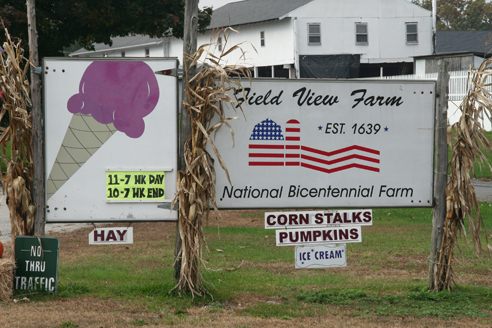
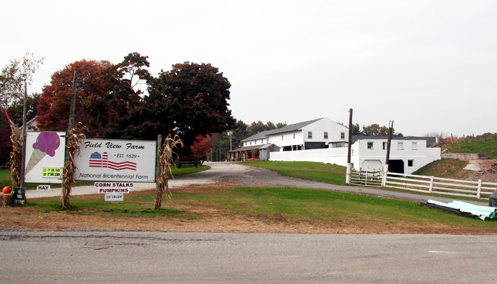
When I was first researching Thomas Hine on the internet some years ago I ran into two articles published in the New York Times (one in 1989 and the other in 1993) which described the Field View Farm in Orange, CT, owned and operated by Walter Hine, as one of the oldest continuously owned and operated family farms in the country going back to Thomas Hine in 1639. The newspaper articles told of the struggles Walter was having keeping a dairy farm going and profitable in an area being overrun by urbanization.
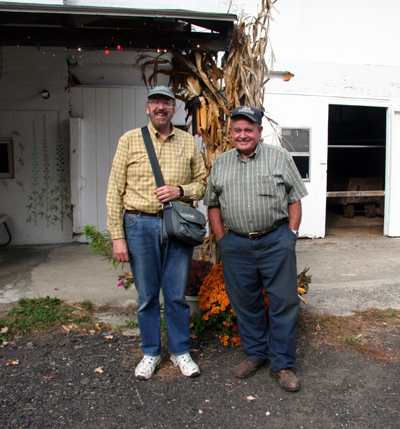
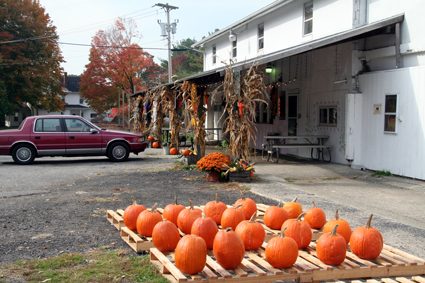
In October of 2008 when I visited the area I stopped by the farm, introduced myself, and spent perhaps an hour chatting with Walter and his wife Bunny (Dorothy). Walter is my 7th cousin once removed. He descends for Thomas Hine's son John and I from son Samuel. Being fall when I visited, the entrance to the farm was set up as a rather elaborate and large road-side-stand selling items of a seasonal nature to the public. The residence on the farm in which Walter and Bunny lived dates to the 1700's so wasn't original to Thomas Hine. I note that my research indicates that Thomas Hine owned land in Milford and Derby Connecticut. I've run into nothing indicating that he also owned land in nearby Orange where the Field View Farm is located. This, however, doesn't necessarily mean that he didn't own the land that is today the Field View Farm and suppose it possible that centuries ago what is today Orange may have been considered part of Milford or Derby.
In the 380+ years since Thomas came to America he and several of his descendents in my branch of the family have been pioneer early settlers in different location as populations moved west into the wilderness from New England. The first two generations of my Hine ancestors, Thomas and Samuel, spent most of their lives in Milford, CT where Thomas had been a pioneer early settler in America. The next two generations, James and Noble, lived in New Milford, CT (35 miles from Milford) where James had been one of the first settlers in what was otherwise Indian territory. The next 2 generations (Homer and Samuel) spent their adult lives in North East Ohio which was known as the Connecticut Western Reserve when Homer Hine established residence in what is today Youngstown as one of the early settlers and the first attorney in 1801 shortly after the American Revolution. An observation I've made during the course of my research into my ancestors is that after one person or family settled a new area of the country, other family members tended to follow them there either shortly thereafter or even in future decades. Also, new settlements tended to be populated over time by multiple families from the same original area. This would seem logical since new settlers would certainly have communicated with family members and friends left behind regarding the benefits of the new settlement. After James Hine left Milford, CT to settle
the new town of New Milford two of his brothers (Daniel and George) eventually
followed and moved there. 6 years after Home Hine in 1801 settled in what would become
Ohio his brother Bildad and family in 1807 moved from New Milford to the new village of Newton
Falls, Ohio about 12 miles from Homer. A few years later Homer's sister
Sophia and her husband Charles Adolphus Boardman moved from New Milford to
Youngstown. During the course of my research into my Ohio ancestors I
learned that many early settlers who interacted with my ancestors (business
associates, friends, doctors, etc ) in the Youngstown/Poland area of Ohio also
had roots in New Milford, CT. and included family names such as Boardman, Mygatt,
and Canfield. Other Early Ohio Hines Members of my direct branch of the Hine family weren't the only descendents of Thomas Hine to settle early on in Ohio.
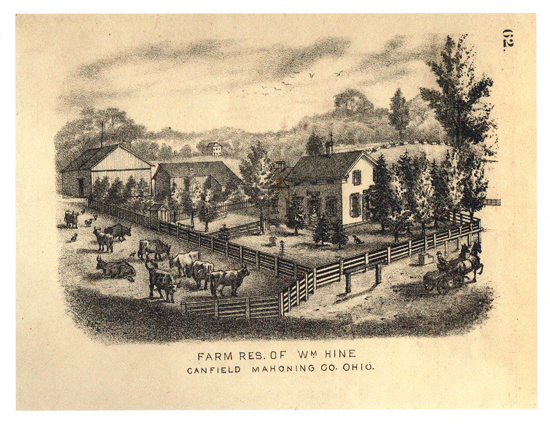
The Canfield, OH Hines: While researching my Ohio ancestors I ran into brothers William Hine (b. 1828, d. 1886) and Warren Hine (b. 1830, d. 1895) in the 1874 Mahoning County Atlas (Ohio) who resided in Canfield, OH. Canfield, as the crow flies, is only 6 miles from Poland, OH and about the same distance from Youngstown, the two locations where my Hine ancestors primarily lived. According to findagrave.com William and Warren Hine were the sons of Capt. David Hine who was born in Milford, CT in 1781 (the son of Daniel and Mary Stone Hine of Milford). David Hine was apparently living in Warren, Litchfield County, CT before arriving as an early settler of Canfield Township, OH in 1804. Warren, CT is about 10 miles from where my ancestor Homer Hine grew up in New Milford, CT before settling in Youngstown 3 year earlier in 1801. While I haven't established exactly how the Canfield Hines descent from Thomas Hine, I'm sure they must have because the common generational movement from Milford to the New Milford area to the same area of the Connecticut Western Reserve (Ohio) is likely not a coincidence. I suspect it highly likely that Home Hine and David Hine knew each other in Connecticut and that David moved to the Connecticut Western Reserve (Canfield) at the recommendation of Homer who had proceeded him there. I'm also sure my ancestors Homer Hine and his son Samuel knew they had nearby relatives however I've run into no reference to the Canfield Hines in any of the materials I've uncovered regarding Homer and Samuel. Another possible but not confirmed
connection: Canfield, OH was named after Judson Canfield, one of the
original and largest landowners in the township starting around 1800. He,
like many that settled the area, was born and raised in New Milford, CT. At
least some other area Canfields were known to have come from New Milford, CT and one of
Thomas Hine's daughters, Alice married Jeremiah Canfield in (Old) Milford in
1687. In 2004 I ran into a very rare used book for sale on the internet by Bertha Hine-Thomas (1884-1974, my 7th cousin) titled "Our Family Tree" so I bought it. It's a hardbound 128 page book probably published in limited quantities around 1951 and includes the genealogical history of Bertha Hine and her husband John W. Thomas. In it she traces her lineage back to Thomas Hine in Milford, CT. Her ancestor Abraham Hine (3rd cousin of my ancestor Homer Hine) left Milford in 1820 and settled in Tallmadge, OH establishing the Hine name in the area. Tallmadge is today a suburb of Akron, OH and is located only about 45 miles west of Youngstown/Poland area where my ancestors settled and lived. Bertha apparently married well as her husband, John W. Thomas, was for a time the president and chairman of the Firestone Tire Company headquartered in Akron. The book has no direct relevance to my Hine ancestors (except for Thomas) but is none-the-less interesting to follow another branch of the family which settled Ohio in the early days. I've compiled the parts of the book relevant to Hine descendents.
Following are some links to relevant excerpts I've extracted from several sources which cover multiple generations of Hines that don't logically fit elsewhere in my write-up about my Hine ancestors. Hine Family Bible Pages: At some point during my on-and-then-off-again research over the years I obtained some digitized pages from what is likely a Hine family Bible passed from generation to generation. I'm embarrassed to say that I can't remember where I found it or who I might have obtained it from. It contains Births, Marriages, and Deaths starting in 1745 with entries as recent as 1972. It starts with Nobel Hine in New Milford, CT but then follows the branch of the my family that settled in Ohio.
"Hine Genealogy, and
history of the descendants of Thomas Hine of Milford, Conn. 1639"
"20th Century
History of Youngstown and Mahoning County, Ohio and Representative Citizens" Covers my branch of the family from Thomas Hine in Milford to my grandfather Homer Henry Hine in Seattle.
"History of
Youngstown and the Mahoning Valley Ohio"
The Author's Hine Descendants List During the course of my research I've accumulated a considerable number of Hine descendent names, dates, and relationships for several branches of the family which I've organized in my genealogy software file. I've attempted to make the information as accurate as possible but it may not be perfect and thus could contain some errors. Also, as is often the case in genealogy, the exact spelling of names and dates can vary from one source to another. Note that, while the information is complete for my branch of the family, it is far from complete for other branches as I've typically only accumulated detailed lineage information for distant cousins that I've run into so I could accurately see how we are related. I've exported my descendants list which can be viewed by clicking on the following link. I've included it here to help aid anyone who may think that we are related find a possible common ancestor. I note that the list is 12 pages long and that deciphering a descendents list can be challenging for those uninitiated in how they're organized.
I'm somewhat of an amateur World War II
historian and some years back I read R. Cargill Hall's book titled "Lightning
Over Bougainville" which tells the famous and heroic World War II story of the
April 18, 1943 mission that killed Japanese Admiral Isoroku Yamamoto in the Solomon
Islands in the South Pacific. Admiral Yamamoto had been responsible for the attack
on Pearl Harbor and was Japan's top military strategist. Code
breakers had determined when and where the Admiral would be arriving by air at a
Japanese held navel base on the island of Bougainville. Sixteen
American P-38 "Lightning" twin engine (single pilot) fighter aircraft flew the
430 miles into Japanese held territory undetected, arrived at the exact time
anticipated, and shot down the Admiral's airplane killing all aboard before
returning the 430 miles to their home base in what turned out to be the longest
fighter intercept mission of WWII. Of the 16 P-38's that flew the mission,
only one was lost in action with the pilot presumed dead. The pilot was
Lt. Raymond K. Hine which the book indicates was from Indianapolis and who was
shot down by Yamamoto's escort fighters. He was awarded the Distinguished
Flying Cross and the Navy Cross posthumously. Internet sources show
he has memorial markers in cemeteries in Granger, IN (near Indianapolis) and
Harrison, OH. I've been so far unable to determine if Lt. Hine descended from
Thomas Hine however I thought I'd honor him with a mention here anyway in case
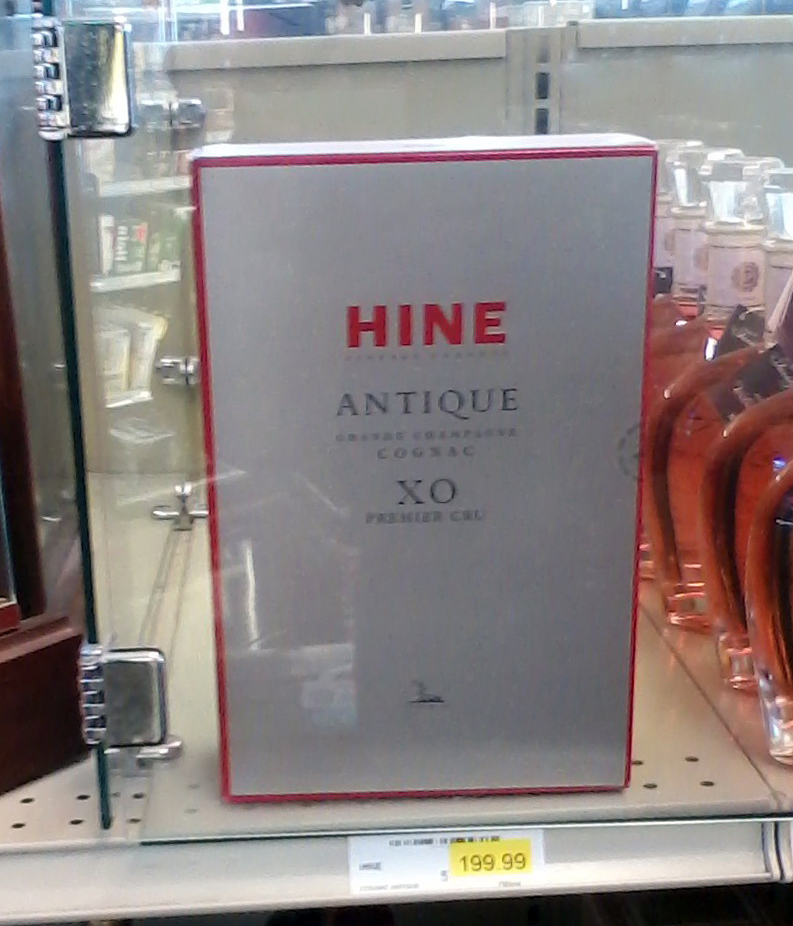
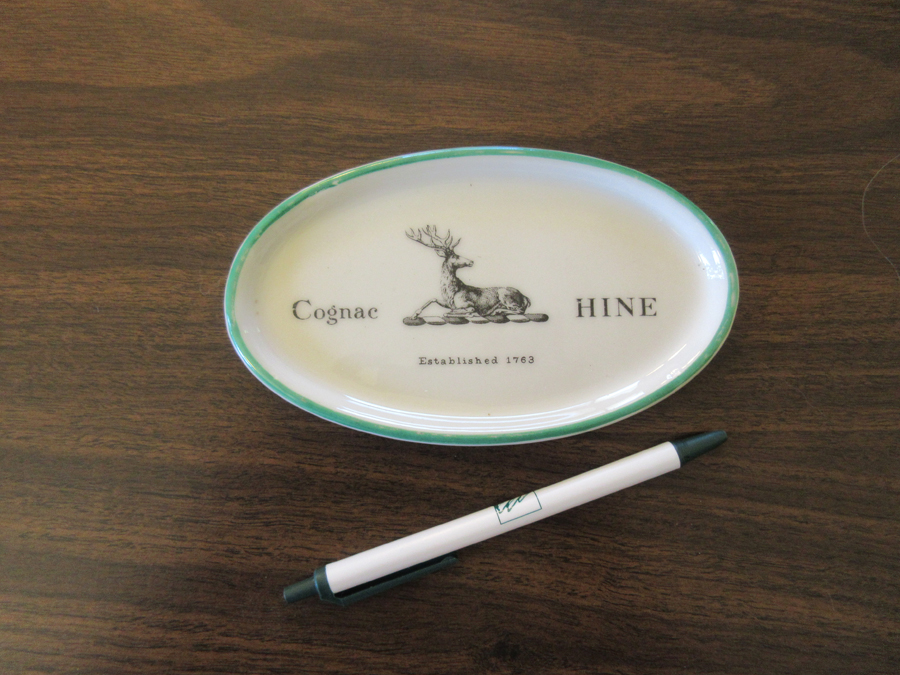
someone might be able to make the connection in the future. Hine Cognac Since I was a child I've been aware that there was a very expensive and well known Cognac marketed under the Hine brand name. My family periodically wondered if we were somehow related. With the advent of the internet I've been able to recently learn more about the brandy's history from it's website. Like all Cognac it's distilled in France but interestingly traces it's roots to a Thomas Hine who came from England before establishing the brand in France in the later 1700's. This name is of course of interest since I descend from the Thomas Hine who arrived in the new world in the early 1600's. I have no way to trace a possible connection but, if there is one, it likely goes back to before my Thomas Hine arrived it America.
|